In-Home Senior Care vs. Nursing Home: Costs, Pros, and Cons Compared
Choosing between in-home senior care and a nursing home is one of the most consequential decisions a family will make for an aging loved one. It touches cost, quality of life, medical needs, family dynamics, and a senior’s sense of dignity and independence — often all at once, often under pressure.
There is no single right answer. The best choice depends on the individual’s clinical needs, functional status, and personal preferences. What this guide does is lay out the honest differences — on cost, care quality, daily experience, and medical coverage — so your family can make an informed decision rather than a reactive one.
The core difference between the two models
Before comparing line by line, it helps to understand what each option fundamentally is.
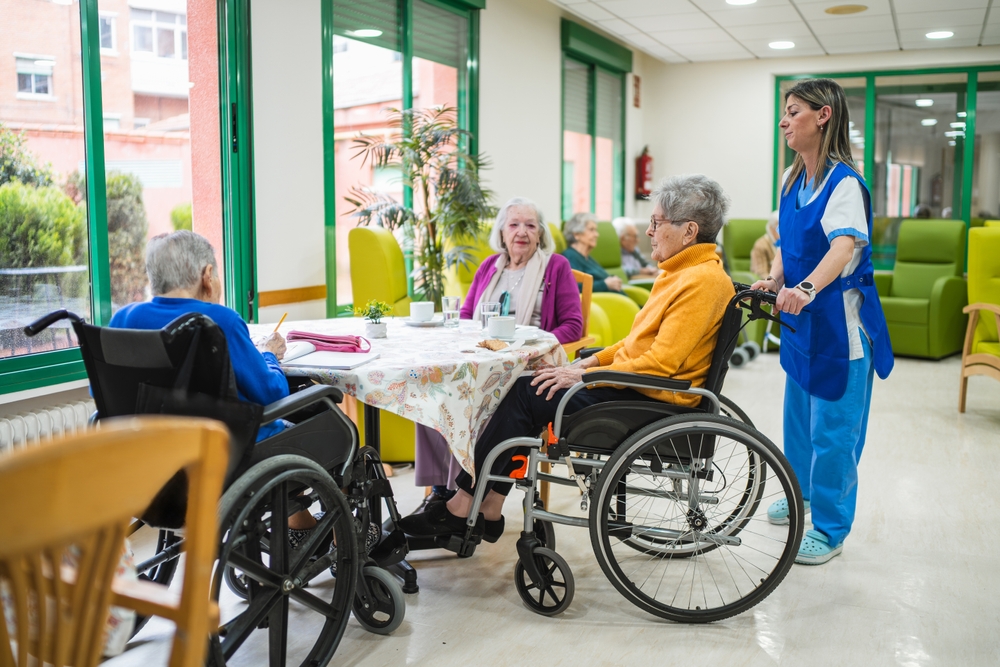
A nursing home (also called a skilled nursing facility, or SNF) is a licensed residential care facility where seniors live full-time and receive around-the-clock supervision, personal care, and medical services from an onsite staff. Nursing homes are appropriate for seniors who need continuous monitoring, complex wound care, post-surgical rehabilitation, or a level of daily assistance that cannot safely be provided at home.
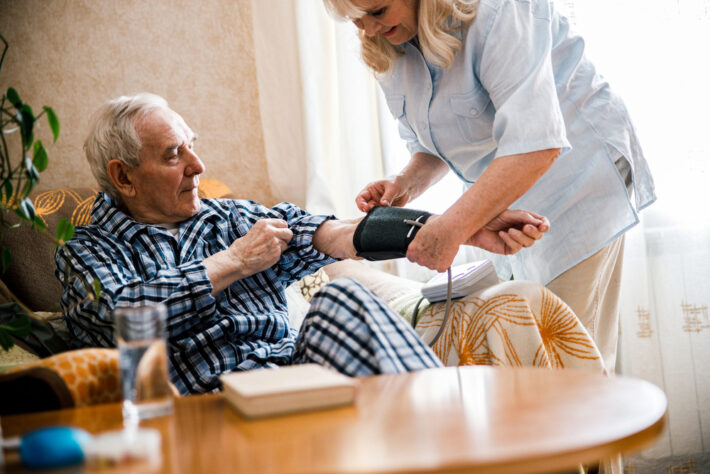
In-home senior care is care delivered where the patient already lives — whether that’s their own home or a senior living community. It spans a wide range: from a part-time companion aide helping with meals and errands, to a physician-led clinical team managing chronic conditions, psychiatric health, and palliative support through regular home visits and telehealth. The in-home model preserves the senior’s independence and familiar surroundings while bringing medical and supportive care directly to them.
The two models serve different needs and different populations. Understanding where the overlap is — and where it isn’t — is the starting point for any good decision.
Cost comparison: in-home care vs. nursing home
Cost is almost always the first question families ask. Here is how the two options compare across Seniority Healthcare’s service region.
Nursing home costs (NJ, PA, NY, DE — 2026)
Nursing home costs vary significantly by state, room type, and level of care provided.
| State | Semi-private room (monthly) | Private room (monthly) |
|---|---|---|
| New Jersey | $11,000–$14,500 | $12,500–$16,000 |
| New York | $12,000–$16,500 | $14,000–$18,000 |
| Pennsylvania | $9,500–$13,000 | $11,000–$15,000 |
| Delaware | $9,800–$13,500 | $11,500–$15,500 |
These costs typically cover room and board, basic nursing care, meals, and standard activities. Specialized memory care units, one-on-one behavioral support, and certain therapies are usually billed separately.
Medicare covers a short-term nursing home stay following a qualifying hospital admission — fully for the first 20 days, then with a significant daily copay through day 100, then nothing. For long-term nursing home stays, families pay out of pocket until assets are sufficiently spent down to qualify for Medicaid.
In-home senior care costs (NJ, PA, NY, DE — 2026)
In-home care costs vary based on the type of care, not just geography.
| Type of care | Typical monthly cost |
|---|---|
| Part-time companion care (20 hrs/wk) | $2,200–$3,800 |
| Full-time companion care (40 hrs/wk) | $4,800–$8,400 |
| Live-in / 24-hour care | $8,000–$14,000 |
| Physician-led medical care (Medicare) | $0–$150 out of pocket |
| Chronic care management (Medicare Part B) | Covered |
| Telehealth and after-hours access (Medicare) | Covered |
The most important distinction in that table is the last three rows. Physician-led in-home medical care — ongoing primary care, chronic disease management, psychiatric services, and care coordination delivered at home — is covered by Medicare and most commercial insurance plans. For most Medicare beneficiaries, the out-of-pocket cost is minimal or zero.
For seniors whose primary need is medical oversight rather than around-the-clock physical assistance, the cost difference between the two models is dramatic. A senior receiving physician-led in-home medical care through Medicare, supplemented by part-time companion support, can receive a high level of coordinated clinical care for a fraction of what a nursing home costs.
For a detailed breakdown of in-home care pricing, see our complete in-home senior care cost guide.
Side-by-side comparison
| Factor | In-home senior care | Nursing home |
|---|---|---|
| Average monthly cost | $0–$8,000+ depending on type | $10,000–$16,500 |
| Medicare coverage | Yes, for medical care (Part B) | Limited (short-term only) |
| Medicaid coverage | Varies by state program | Yes, once assets are spent down |
| Lives at home | Yes | No |
| 24-hour supervision | Only with live-in care | Yes |
| Physician access | Regular visits and telehealth | Typically 1–2x/month at most facilities |
| Personalized attention | High — 1:1 care | Variable — often high staff-to-patient ratios |
| Social interaction | Requires intentional planning | Built into facility structure |
| Family involvement | Flexible and encouraged | Regulated visiting hours at some facilities |
| Independence | Preserved | Limited by facility routines |
| Best suited for | Moderate medical needs, strong preference for home | Complex round-the-clock care needs |
Pros and cons: in-home senior care
Advantages
Familiar environment. Research consistently shows that seniors who remain in familiar surroundings maintain better cognitive function, experience less anxiety, and report higher quality of life. The home is not just comfortable — it is cognitively and emotionally stabilizing for older adults, particularly those with memory challenges.
Personalized, 1:1 attention. In-home care is by definition individual. Whether it’s a physician making a home visit or a companion aide helping with morning routines, the senior receives undivided attention. This stands in stark contrast to nursing homes, where staff-to-patient ratios can be stretched and care is necessarily more generalized.
Better Medicare coverage for medical care. Under Medicare Part B, physician-led in-home medical services — primary care, chronic condition management, psychiatric care, palliative support — are covered with minimal cost-sharing. For many seniors, this makes in-home medical care meaningfully more affordable than facility-based care.
Flexibility. In-home care scales with need. A senior can start with a few hours of support per week and increase as needs change, without the disruption of moving to a new facility. Care plans adjust as clinical situations evolve.
Family closeness. In-home care makes it easier for family members to stay involved. There are no visiting hour restrictions, and family members can participate in care conversations, accompany loved ones during provider visits, and remain connected to day-to-day life.
Lower risk of facility-acquired infections. Nursing homes, like all institutional care settings, carry an elevated risk of healthcare-associated infections. Seniors with compromised immune systems may be better protected in their own homes.
Limitations
Round-the-clock supervision requires full-time staffing. For seniors who need constant monitoring — due to advanced dementia, severe fall risk, or complex post-acute needs — 24-hour in-home care can be logistically challenging and nearly as expensive as a nursing home.
Home environment may need modification. A home that was not designed for aging in place may require modifications — grab bars, ramp access, stair lifts — that involve upfront cost and planning.
Isolation risk. Without intentional effort, seniors receiving care at home can become socially isolated. This is a real concern, particularly for those who lived active social lives and now have limited mobility.
Caregiver coordination. Managing a team of in-home caregivers and providers requires coordination. A well-structured program like Seniority Healthcare’s COMPASS Program addresses this through an integrated care model, but it is worth understanding before choosing a provider.
Pros and cons: nursing homes
Advantages
Around-the-clock staffing. For seniors who genuinely need continuous monitoring and hands-on care, nursing homes are designed for it. Staff are available at any hour, and the care infrastructure — emergency response, medication administration, therapy services — is already in place.
Built-in social environment. For seniors who thrive with peer interaction, dining in community, and structured programming, a quality nursing home provides social infrastructure that can be difficult to replicate at home.
Post-acute rehabilitation. For short-term recovery after a hospitalization, surgery, or significant illness, a skilled nursing facility provides intensive rehabilitation therapy (physical, occupational, speech) in a concentrated environment. Medicare covers this short-term stay.
Caregiver relief for families. In some situations, the demands of in-home care on family caregivers — particularly adult children managing careers and their own households — make a nursing home the more sustainable option for the whole family system, not just the patient.
Limitations
Cost. Long-term nursing home care is one of the most expensive forms of healthcare in the United States. In the Northeast, costs routinely exceed $10,000 per month. Medicare’s nursing home benefit is short-term only; long-term stays are paid privately until Medicaid eligibility is established.
Limited physician contact. Contrary to what many families expect, nursing home residents do not see a physician daily — or often even weekly. Physician visits at most SNFs occur once or twice a month, with nursing staff managing day-to-day care in between. Families who expect active physician oversight may find this insufficient.
Loss of independence and autonomy. Moving to a nursing home means adapting to an institutional schedule — meal times, medication rounds, activity programming — that may conflict with a lifetime of habits and preferences. This adjustment is significant for many seniors and not always well-tolerated.
Transition stress. Relocating to a nursing home is a major life transition. For seniors with dementia or cognitive impairment, the disruption of an unfamiliar environment can accelerate decline.
When in-home care is the better choice
In-home senior care is generally the stronger option when:
- The senior has moderate medical needs — chronic conditions, medication management, psychiatric care — that can be managed with primary care visits and telehealth rather than 24-hour onsite nursing
- The senior has a strong preference to remain at home, and that preference is factored in as a legitimate clinical consideration
- The home environment can be safely adapted to support daily function
- Medicare coverage applies, making physician-led in-home care financially accessible
- Family members are available to supplement professional care with regular involvement
This describes the majority of Seniority Healthcare’s patients — seniors with complex medical needs who are living in their homes or senior living communities and receiving physician-led care that keeps them stable, out of the emergency room, and closely monitored.
When a nursing home is the better choice
A nursing home is typically the more appropriate option when:
- The senior requires continuous skilled nursing monitoring that cannot be safely replicated at home
- Complex wound care, ventilator support, or other high-acuity interventions require institutional infrastructure
- Severe functional decline makes 24-hour supervision necessary and live-in in-home care is not financially or logistically feasible
- A short-term post-acute stay is needed for intensive rehabilitation following a hospitalization
It is worth noting that these criteria apply to a smaller portion of the senior population than most families assume at the outset. Many families move a loved one to a nursing home out of a belief that it is the only way to ensure adequate medical oversight — when in fact physician-led in-home care could provide that oversight with greater frequency, lower cost, and without the disruption of leaving home.
A note on the “in between” option
Many families find that neither full nursing home placement nor entirely independent home living fits the situation perfectly. Senior living communities — assisted living, memory care, and continuing care retirement communities — occupy this middle ground, offering residential care with some onsite services while typically allowing residents to bring in their own medical providers.
Seniority Healthcare works within senior living communities across New Jersey, Pennsylvania, New York, and Delaware, providing embedded physician-led care to residents alongside the facility’s existing support structure. This approach is worth understanding if you are considering assisted living for a loved one and want to ensure consistent, high-quality medical oversight within that setting.
How to make the decision
When families are weighing these options, the clearest path forward usually starts with a clinical needs assessment. A geriatric physician or nurse practitioner can evaluate:
- Which daily activities the senior can safely manage independently
- What level of medical monitoring the senior’s conditions require
- Whether the home environment is safe or can be made safe with modifications
- What the senior’s own preferences are and how strongly they are held
From that baseline, the financial picture — what Medicare or insurance covers, what the family can manage privately — can be applied to narrow the options to those that are both clinically appropriate and financially sustainable.
If you are in New Jersey, Pennsylvania, New York, or Delaware and want a clinical perspective before making this decision, Seniority Healthcare’s intake team can help assess whether our in-home care model is right for your loved one. Contact us or learn about enrollment.
Frequently asked questions
Is in-home care cheaper than a nursing home?
For most seniors with moderate medical needs, yes — significantly so. Nursing homes in the NJ/PA/NY/DE region average $10,000–$16,500 per month. Physician-led in-home medical care covered by Medicare can cost patients as little as $0–$150 per month in out-of-pocket expenses. Even full-time non-medical in-home companion care typically costs less than nursing home placement in this region.
Does Medicare pay for a nursing home stay?
Medicare covers short-term skilled nursing facility care following a qualifying hospital stay — fully for days 1–20, then with a daily copay through day 100, then nothing. It does not cover long-term nursing home placement. For ongoing nursing home residence, families pay privately until they qualify for Medicaid.
What level of care do nursing homes provide that in-home care cannot?
The primary gap is around-the-clock hands-on supervision. For seniors with very high acuity needs — severe behavioral symptoms of dementia, complex wound care, ventilator dependency — the continuous staffing infrastructure of a nursing home may be necessary. For seniors with significant medical complexity but manageable functional needs, in-home care can provide equivalent or better medical oversight at lower cost.
Can a senior receive the same quality of medical care at home as in a nursing home?
In many cases, yes — and sometimes better. Nursing home residents typically see a physician only once or twice a month. Physician-led in-home care programs like Seniority Healthcare provide regular visits, telehealth access, nurse care management between visits, and 24/7 on-call coverage — a level of clinical engagement that exceeds what most nursing homes provide for non-acute patients.
What if my loved one’s needs increase while receiving in-home care?
A well-structured in-home care program adjusts as clinical needs change. At Seniority Healthcare, our care team monitors patients proactively and coordinates with families when a change in care level is warranted. If a patient’s needs eventually exceed what can be safely managed at home, we help facilitate that transition — but in our experience, proactive in-home management significantly reduces the rate at which seniors reach that threshold.
How do I get started with in-home senior care?
Enrolling with Seniority Healthcare begins with a call to our intake team. We verify your insurance coverage, confirm eligibility, walk through the consent process, and schedule your loved one’s first visit. Most patients are enrolled and seen within one to two weeks.
The bottom line
In-Home Senior Care vs. Nursing Home – For the majority of seniors managing chronic conditions, cognitive changes, or functional decline, in-home care — particularly physician-led medical care covered by Medicare — offers a compelling combination of clinical quality, affordability, and quality of life that nursing home placement cannot match at the same cost.
Nursing homes remain the right answer for seniors who need continuous skilled supervision and have care needs that cannot be safely met in a home setting. But that group is smaller than the instinctive assumption many families make when a loved one’s health begins to change.
The right decision starts with an honest clinical assessment and a clear understanding of what each option costs and provides. If you are working through this decision for someone in New Jersey, Pennsylvania, New York, or Delaware, Seniority Healthcare’s team is here to help.
Learn about in-home senior care · Check insurance coverage · Enroll today